
BLOG
Find support not just for emotional eating, but all aspects of your well-being.
3 Good Things That Can Come from a Binge

Binge eating feels all encompassing. You feel helpless to stop what and how much you are going to eat, and chances are you are doing it in the moments where you are alone. Here are three signs you may have missed during a binge and how to feel better prepared the next time this urge comes up for you:
- That moment when you decide to give into a binge, even when you know it won’t make you feel good in the long run, is actually a good sign. Even if you continue with the binge, you’ve made a mental note that there is an ‘after’ to the binge. We are absolutely not applauding the guilt and shame that comes post-binge but knowing that you are going to get through the binge is the beginning to being able to think beyond it—showing you’re not so afraid of what life might send your way next!
- What do to next: tell yourself, out loud even, that “I am going to get through this.” Speaking to yourself in this way creates a kind of pep talk that can allow some positivity (and even empowerment) co ...
Not All Emotional Eaters are Overweight
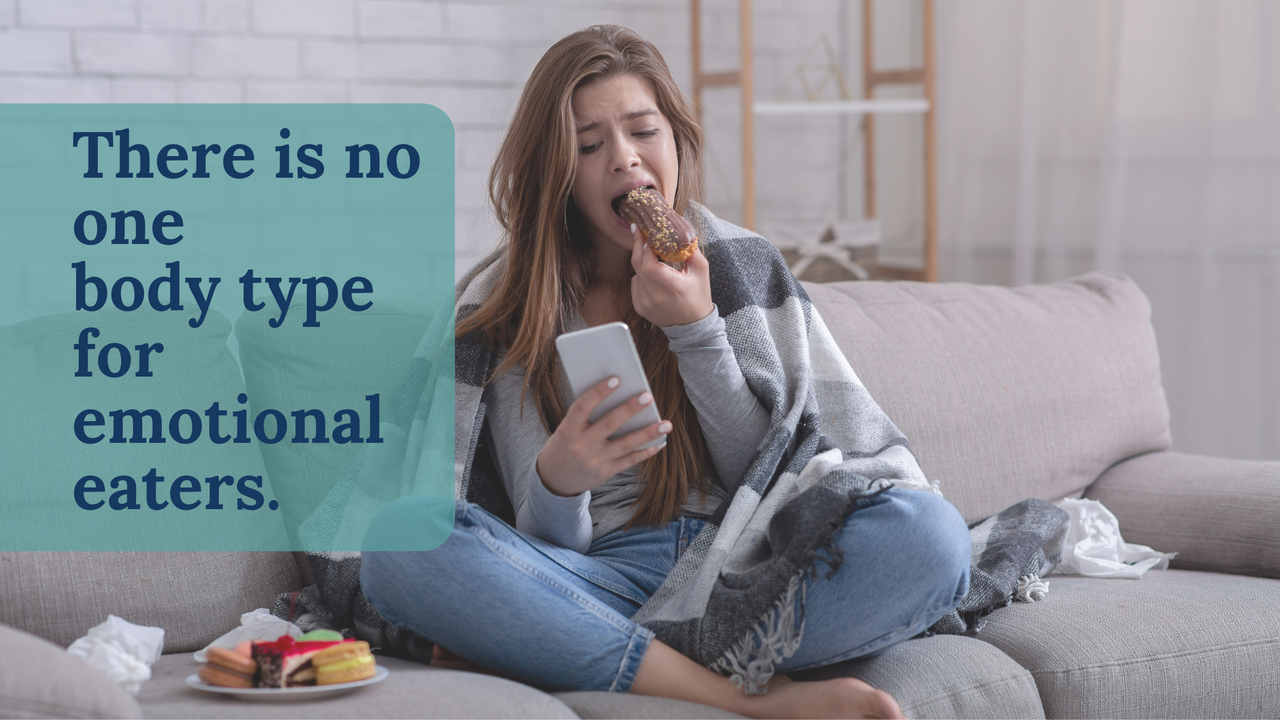
When TV shows and media show us what an emotional eater looks like, it is usually someone who would be categorized as obese by the BMI chart. Their rolls and double chin are highlighted to create a character that seems lazy or is the punchline in a few jokes. Not only is this incredibly harmful messaging to those in bigger bodies, it also isn’t indicative of the experience of all emotional eaters.
But there is no one body type for emotional eaters, it can affect anyone.
They could identify as male or female.
They could be a preteen or a person in their 50s.
They could be from any cultural background.
They could reach for savoury or sweet foods when an emotion comes up.
What they do all have in common is that is that they eat to sooth themselves. When a feeling comes up that they can’t manage or don’t want to feel, they reach for food as a distraction, to numb out, even to bring some control or joy to the moment.
While from a caloric perspective, it is true that eating more than ...
Which Came First: The Depression or The Weight Gain?
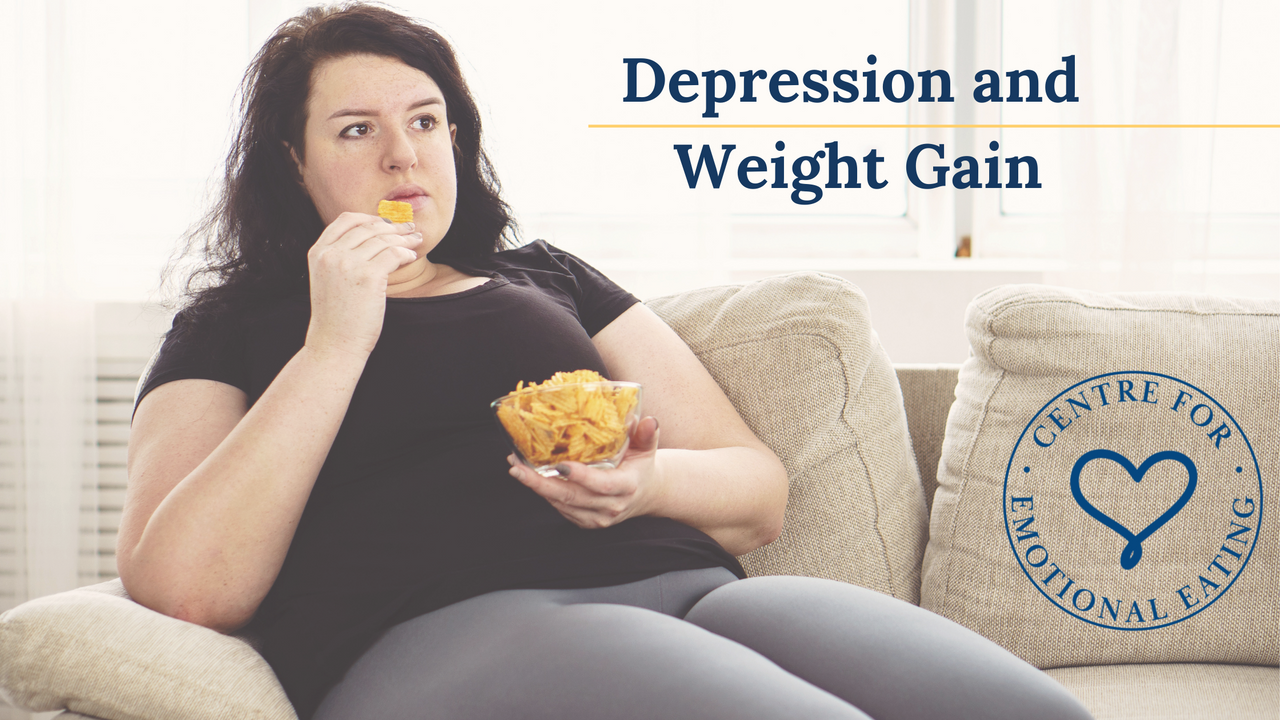
As an emotional eater, it may be difficult to separate the answer to this question. It is a classics chicken-egg conundrum.
When you feel strong emotions—grief, anger, anxiety—it is likely that you turn to food to sooth them away. Likely the foods you choose are ones that bring you a sense of comfort (you have happy memories associated with it) and give you a dose of the feel-good serotonin followed by a sugar crash that might made you feel dull or tired enough to sleep (and block out all feelings). These foods are likely high in fat, sugar, and taste amazing! But they are the kinds of foods that can lead to weight gain if eaten quickly and without mindfulness. In this scenario, weight gain comes from the food used to calm emotions like depression.
On the other hand, it is natural to gain weight as life circumstances change like becoming a new mom, after a breakup, or during a global pandemic. In these scenarios, you might find that you’ve gained weight and begin to feel sad and incr...
Find Out What Foods Make You Feel Satisfied!

Some foods we reach for when we’re tired ☕ Some foods we reach for when we’re upset 🍩 Some foods we reach for because we have labelled them “good” 🍏
But have you ever stopped to think about what foods you enjoy? Having food satisfaction at every meal—you read that right!—can lead to fewer cravings and the desire to overeat.
Food satisfaction means two things: that you physically respond positively to the food (it makes you feel full, gives you energy) and you also have a psychological enjoyment of what you ate (it’s tasty, “hits the spot”).
You may be wondering: how do I find out what I really like to eat? Believe it or not, this is a very common question. We are constantly told what foods we should and shouldn’t eat. If you’ve been around the diet block, chances are you’ve cut out whole food groups like carbs or fat or sugar at one point or another. Getting rid of this diet conditioning may seem impossible, but it can be a fun experience! Here’s where to start:
Step One: Write...
What Emotional Eating Gives You Part 2!
We recently did a post about what emotional eating gives you. In this second part, we’ll take a look at what else you can do to give yourself the feelings you crave when reaching for your favourite foods.
But first, we want to remind you that there is no such thing as perfect. Of course, supporting your mental health is an important way to lessen the desire to eat emotionally, but we will also be the first to tell you that food will always provide comfort. Experiences will come up in your life that make you feel upset, and that is normal and ok! We wouldn’t know how happy we could be without knowing how sad or frustrated or angry we can also be. As humans we are built to experience the full range of emotions.
Of course, there are tools and strategies to help you feel more comfortable around food and strong emotions, but expecting perfection—that you’ll NEVER eat emotionally again—just isn’t true (that totally goes for us too!). Showing yourself some compassion when feelings bubble up...
What Emotional Eating Gives You
“Why do I eat emotionally? What do I get out of it?”
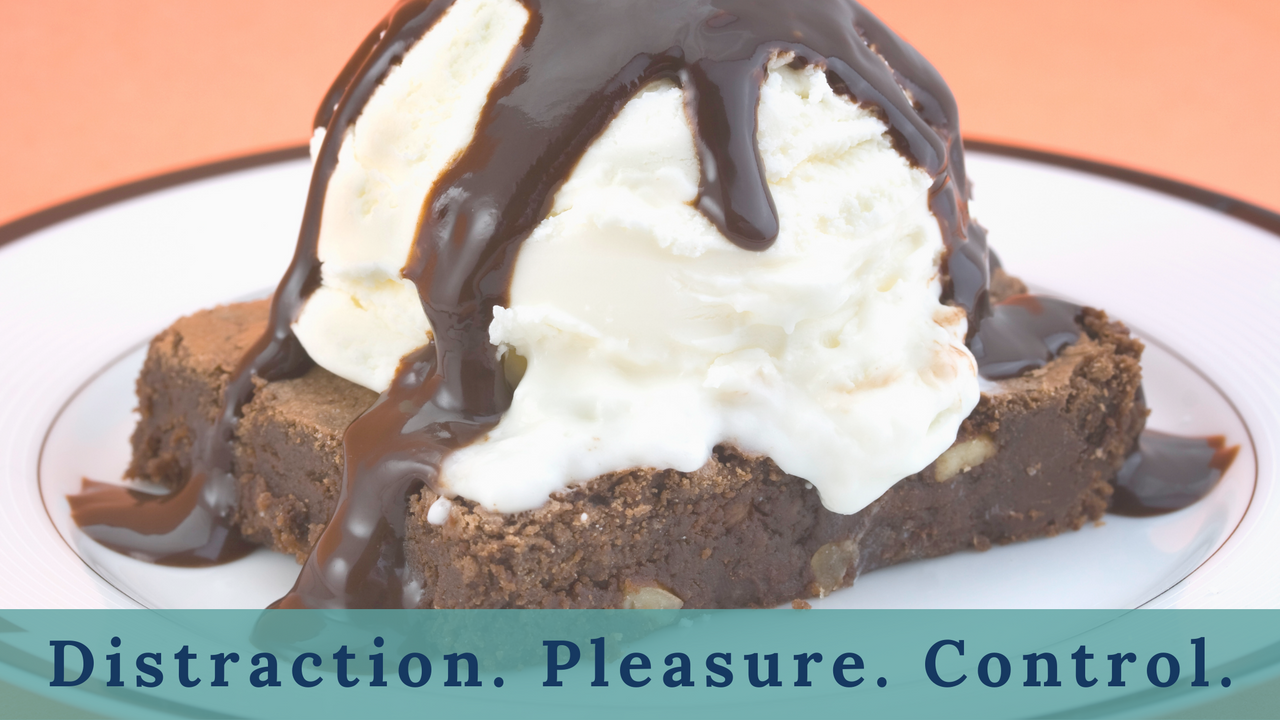
Sound familiar? We know emotional eating gives us feelings of shame and guilt, it can lead to weight gain, it can begin a spiral of negative self-talk, none of this we would volunteer to experience. But emotional eating gives us other things too; it is powerful. When you let your emotions guide what you eat, it isn’t about what you eat but why.
Eating emotionally…
… works as a distraction: you’re focussed on the food and not how you feel. In some scenarios, you eat so much you can only focus on the physical discomfort of overeating and not on the emotional discomfort.
… gives us pleasure: we reach for foods—like mashed potatoes, doughnuts, and pizza—that overload our senses (our mouth waters, our nose loves the smell). Sometimes the foods we reach for can even remind us of happy memories: meals at grandma’s house, birthday parties with friends, or even incredible meals had on vacation.
… gives us a sense of control. When everyth...
Stop With the Holiday Food Guilt
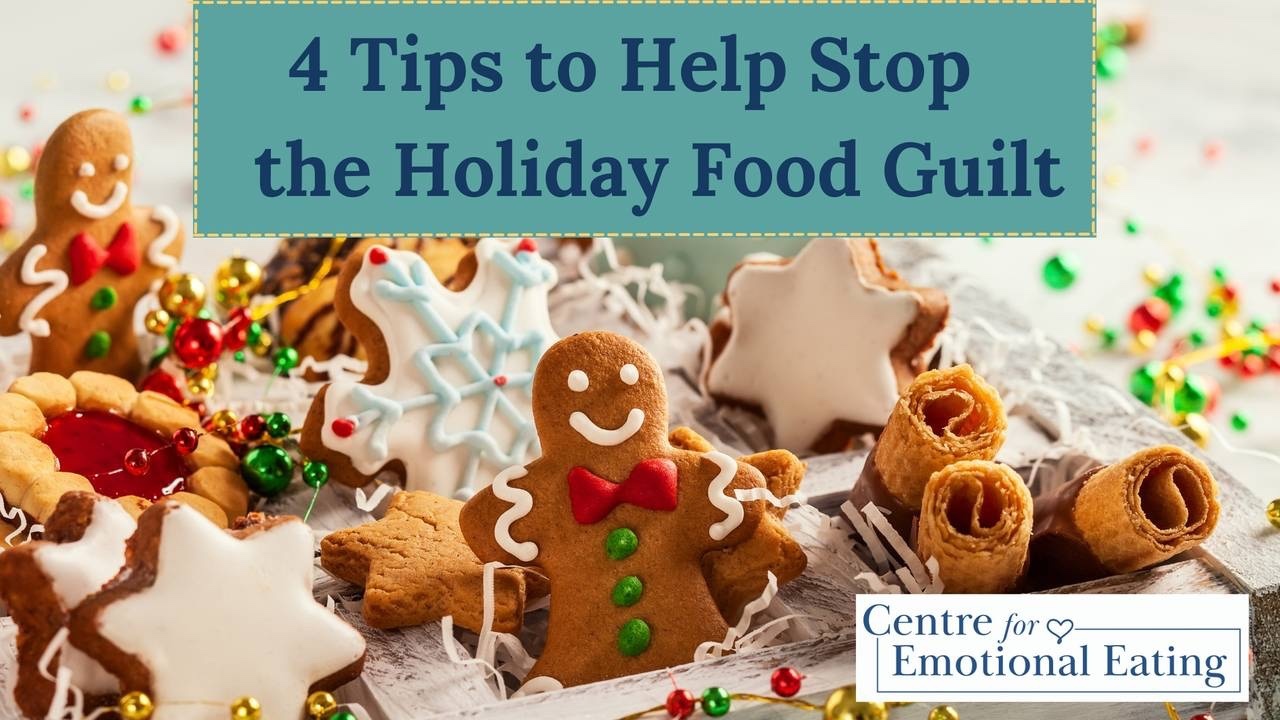
December is a delicious time of year! There are family recipes that get baked, holiday parties with seasonal cocktails, and who is going to argue with an advent calendar that lets you have a piece of chocolate every day!
If you read the above and immediately felt overwhelmed (or like you’ll need to restrict your eating this time of year), STOP. This time of year, can be triggering for a lot of people, not only are all sorts of foods more available, eating until bursting is encouraged by family members and in the media, and stress if running high—hello mall shopping and family drama! This time of year is a rollercoaster that can have your emotional eating get the best of you.
But it doesn’t have to be like that. Here are a few ideas on how you can challenge the holiday expectation to overeat, overexercise, overreact.
- Trying eating food that you actually enjoy and tastes good to you. After a couple of days of gingerbread, you may find yourself wanting a more balanced meal.
-
...
6 Journaling Prompts for After You’ve Eaten Emotionally

Take a deep breath. And another one.
Binges are full of emotions before, during, and after. Food has a way of giving us a sense of calm and numbness, but anyone who has eaten emotionally knows that the intense emotions that lead up to a binge and then the ones that follow after—guilt, shame—can leave you feeling so much worse than before any food was eaten.
Emotional eating is a common coping mechanism that many people use to manage everything from stress, to not getting enough sleep, to depression. While your mind may be telling you there is something shameful about emotional eating, the truth is that it is a sign that you are doing your best to manage everything life throws at you. And sometimes life can be overwhelming or scary or just plain crappy.
So, you’ve binged on all your favourite foods in an attempt to escape your negative feelings. As you slowly come out of the binge mentality and regret begins to blossom, take a moment to pull out your journal and try one or a few of t...
Your Emotional Eating Toolkit: Slowing Down a Binge

This blog post is the one of a series where we’re giving advice on tools you can try and see if they are worth adding to your ‘toolkit’ when you’re faced with emotional eating. Some tools will work for you and others you won’t find as helpful—check out our previous posts here and give some of them a try!
Have you had a busy day at work, and you sit with some chips next to your computer, only to find yourself scraping the bottom of the bag without realizing it? Or maybe it is late at night and you’re in front of the TV and scooping from an ice cream pint until there isn’t a bite left?
Often those of us who binge eat will do so in a rushed way. This could look like hopping from sweet to salty and back to sweet again, or maybe it’s a panicked shopping spree at the corner store before up ending the bag of goodies in bed where you intend to indulge. Ultimately, we’re hoping the binge will give us some relief from how we’re feeling or create a false sense of control when it seems like eve...
5 Tips for When You’re Having a Bad Body Image Day
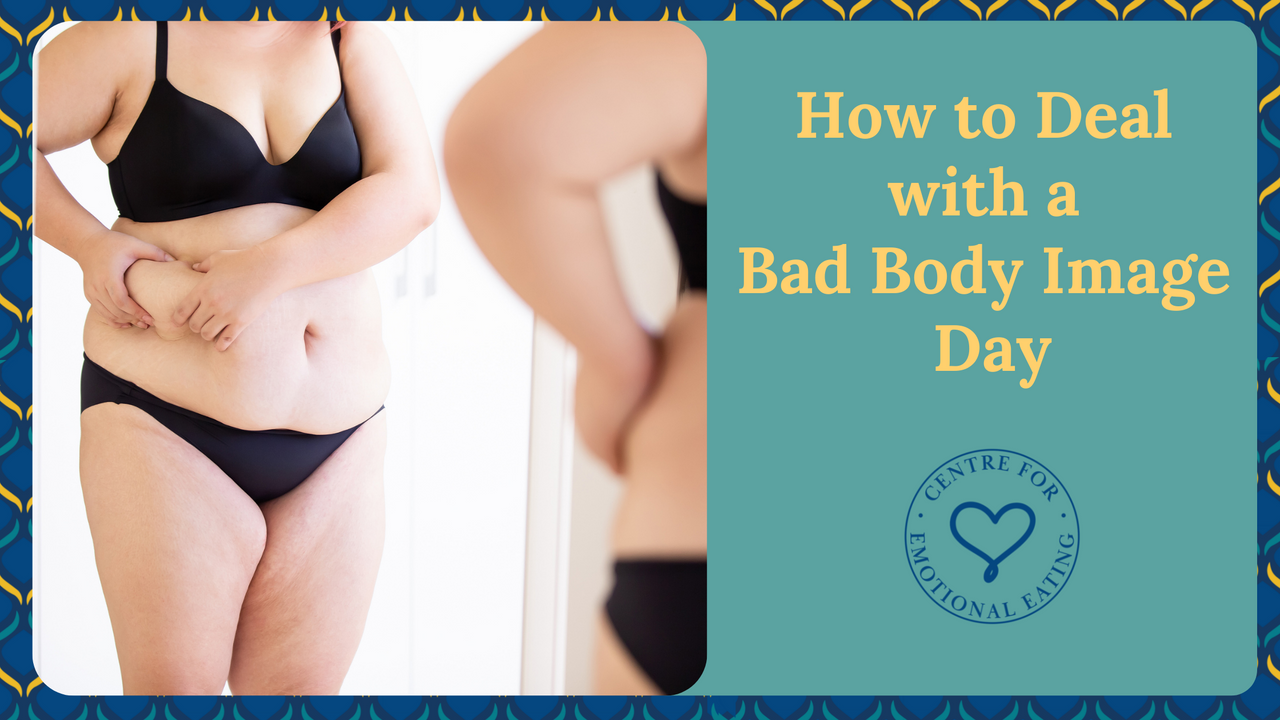
We have all been there. Whether it is after binge eating the night before or a pair of pants no longer fits as we’d like them to or we’re out with friends and believe we’re the biggest body there, we have all had days where our body image is negative. Often a single day can become a few days, or a week, and it so often leads to (more) emotional eating.
It can be so easy to think that the solution to “snap out of it” would be to restrict your food intake and get in a long workout the next day (hands up if you’ve been there!). But this starts the restrict-binge emotional rollercoaster again—a ride we hate and want to get off of!
Here are 5 tips of things to do instead of beating yourself up with tasteless salads and torturous workouts:
1. Put on an outfit that you feel good in. This could mean your softest sweater, most flattering leggings, or your favourite dress, whatever is going to give you a little mood boost to see yourself and feel your body in. This is a way to show your body ...

